Savoir-Faire · The People & The Hands
Two hands hold each Relier jewel.
Those of the miner who, far from any salon, recognised a green worth lifting from the dark — and those of the artisan who, in a Paris atelier, drew the line around it. Between these two gestures lies the whole of our savoir-faire: a patience inherited in Boyacá, a precision learned in Paris, and a single emerald that travels, slowly, from one to the other.
Act I
The people of the mountain.
The miners, the elders, the families of Boyacá — those whose names are absent from every certificate, and without whom no emerald would ever rise into the light.

I · The first gaze
Before the jewel, a face in the stone.
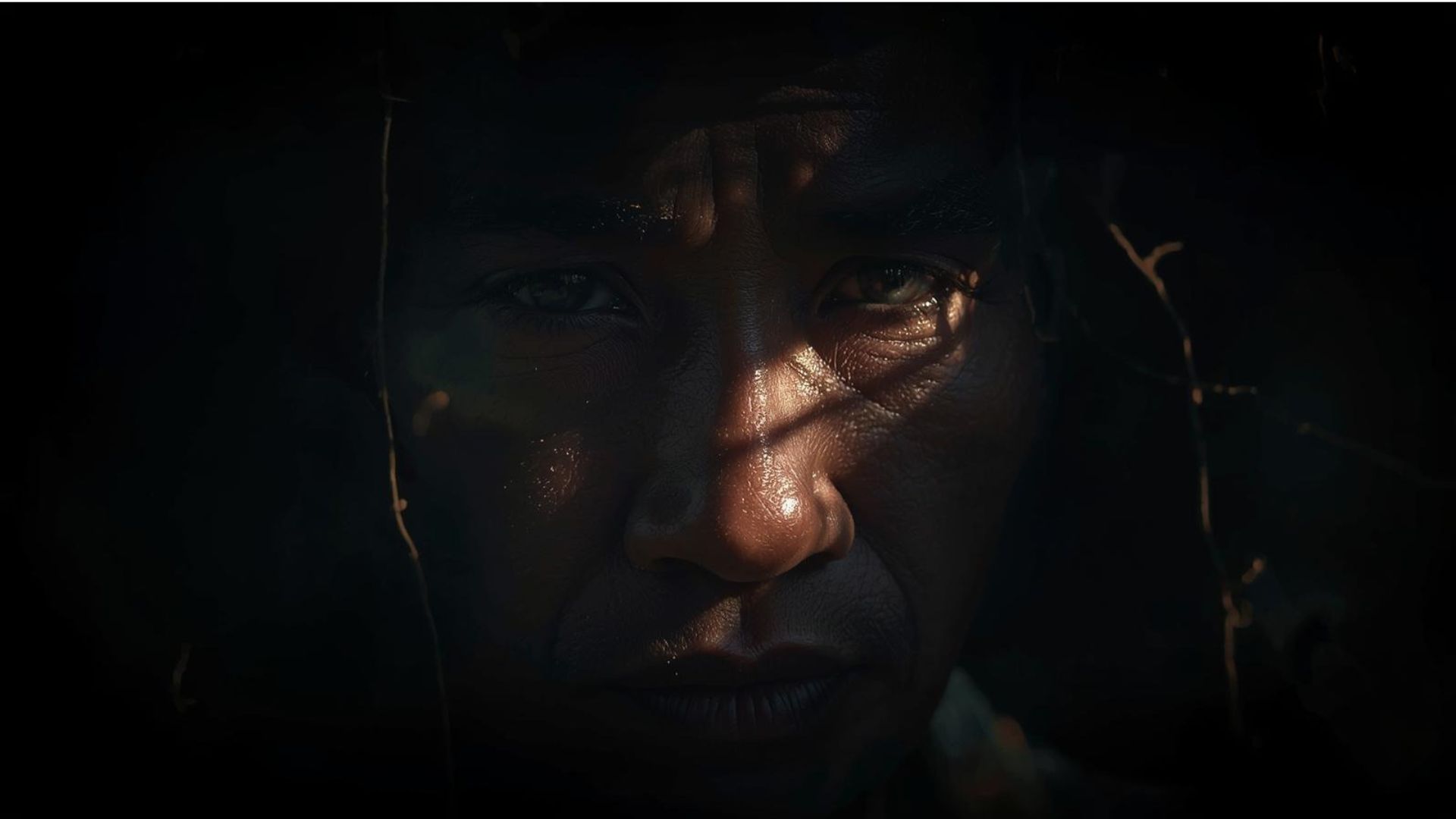
Long before the emerald reaches a vitrine, it is held by a gaze. In the galleries of Boyacá, a face appears in a frame of raw mineral — eyes adjusted to a darkness most of us would never sustain. The first person to recognise a Relier emerald is not a connoisseur in a salon. It is a miner, lit by a single lamp, deciding that this stone is worth bringing into the world.

II · The patience of the mountain
A vigil kept by hand, by hand, by hand.
The mountain is not generous on demand. It gives, sometimes, after weeks of patience — sometimes after months. The miner returns at dawn, returns at dusk, returns the day after. The Maison does not buy emeralds; it accompanies the people who wait for them. Each green stone we receive is, first, a measure of someone's perseverance.

III · The youngest hands
What is passed, generation to generation.
In the villages around the mines, the work is inherited the way a name is. A father teaches a son the angle at which a vein of crystal will betray itself; a mother teaches a daughter to read the colour of a wash of river clay. Relier works with families — not with anonymous suppliers — because a stone carries the memory of the hands that pulled it from the dark.

IV · The women of the village
Those who hold the village together.
Behind every miner stands a household: women who run the kitchens, the children, the small economies that make a season of waiting possible. The Maison commits a share of each piece sold to these households — to schooling, to clean water, to the slow building of a life that does not depend on the next find. The jewel is the visible part of a much larger labour.

V · The elders' knowledge
A reading of the earth that no machine has yet learned.
The elders do not need an instrument to know whether a wall of rock is worth opening. They listen — to the change of the air, to the temperature on the back of the hand, to the colour the dust takes under the lamp. This knowledge is not written. It is whispered, passed mouth to mouth, kept alive at the price of being practised. Relier is built upon the dignity of this whisper.
VI · A green that has been seen
When a stone has met its first witness.
When the emerald is finally lifted into the daylight, it has already been looked at — slowly, almost ceremoniously — by someone whose name will never appear on a certificate. The Maison considers this first gaze to be the true beginning of the jewel. Every Relier piece is, in this sense, signed twice: once by the artisan in Paris, once by the man or the woman who first knew what they had found.
Act II
The hands of the atelier.
In Paris, the rough stone meets the line of a pencil, the cool breath of a workbench, the patience of a single artisan. The jewel is not assembled. It is composed.
VII · The first line
From the rough stone, a drawing.
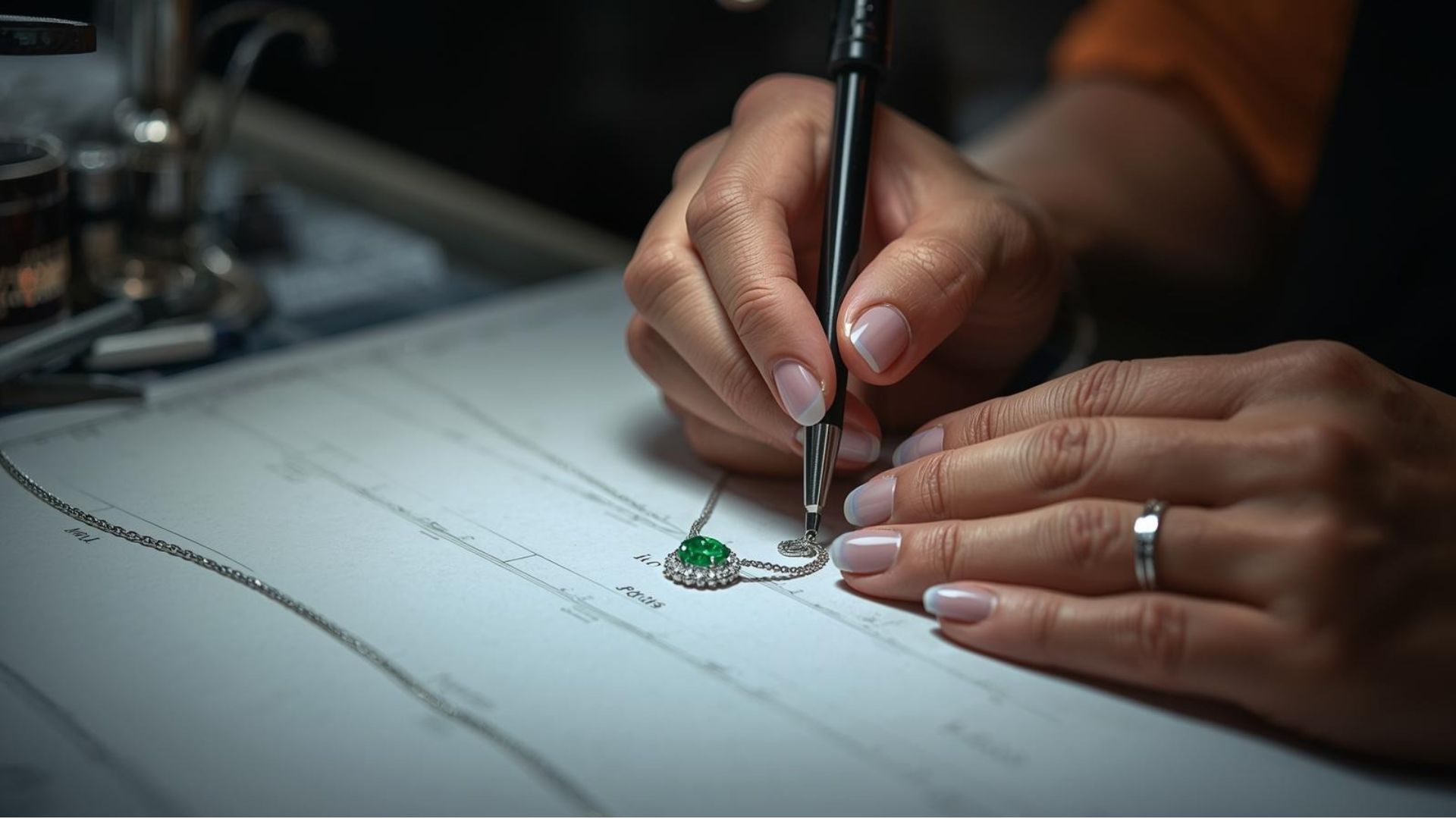
In a quiet room in Paris, the stone is set down on a sheet of paper. A designer studies its body — its tone, its inclusions, the way light enters a particular face — and begins to draw around it. The first line is the most important: it decides whether the emerald will be carried, or merely surrounded. At Relier, the jewel is always drawn from the stone outward, never the reverse.
VIII · The drawing meets the metal
When paper and stone agree.
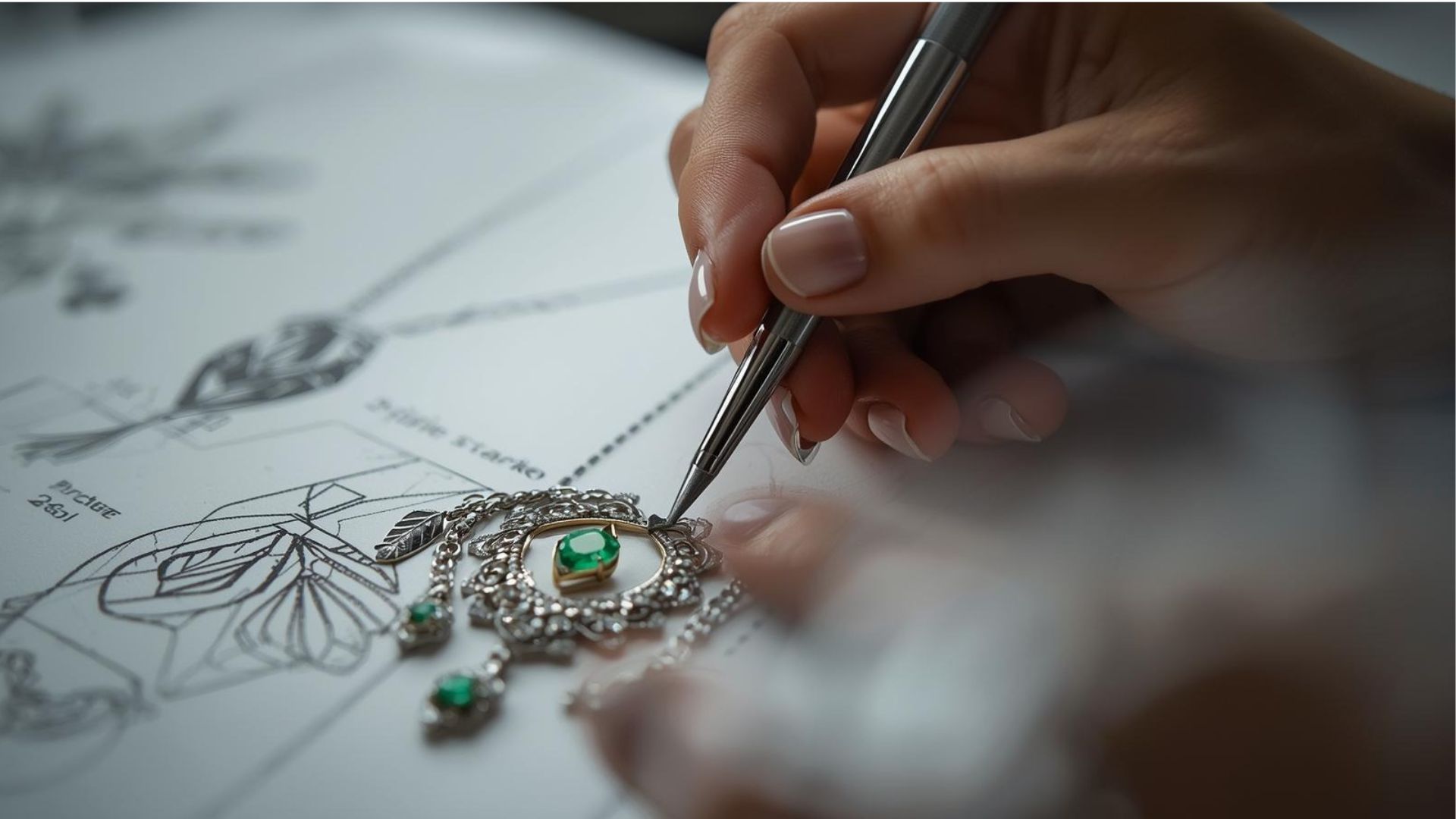
The drawing is laid against the first prototype; the prototype, against the drawing. The two are compared in silence — the curve of an arabesque, the depth of a setting, the cadence of a row of diamonds. Nothing leaves this stage until the page and the piece say the same thing. Patience here is not a virtue. It is the working method.
IX · The atelier
A single lamp, a single hand, a single piece.
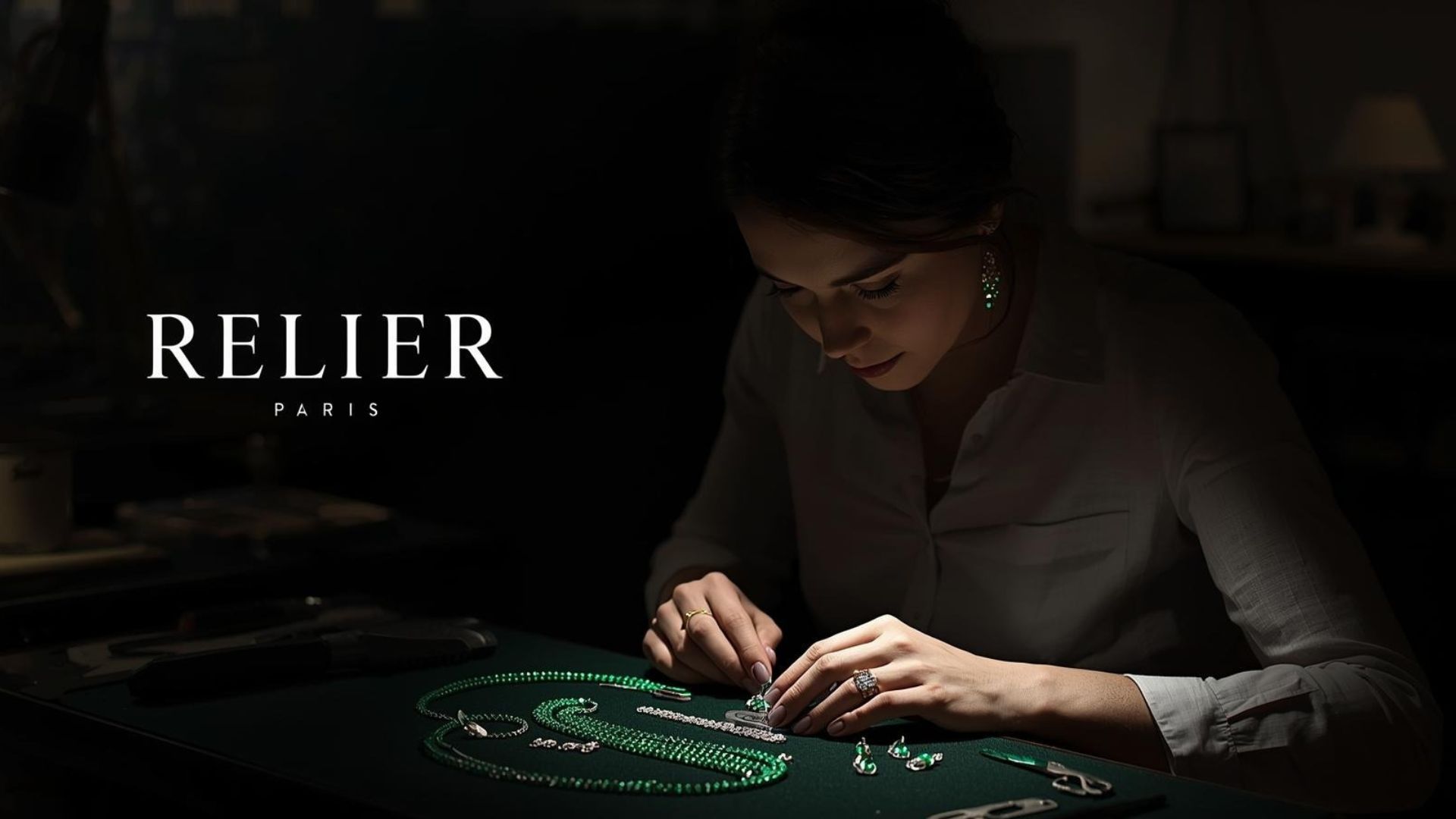
In the Paris atelier, each jewel is assembled by one set of hands from start to finish. The artisan sits before a long, dark felt; emeralds, diamonds and threads of gold are laid out like sentences waiting to be composed. The room is quiet on purpose — a single lamp, a single breath. A Relier piece is the work of one artisan, never of a chain.
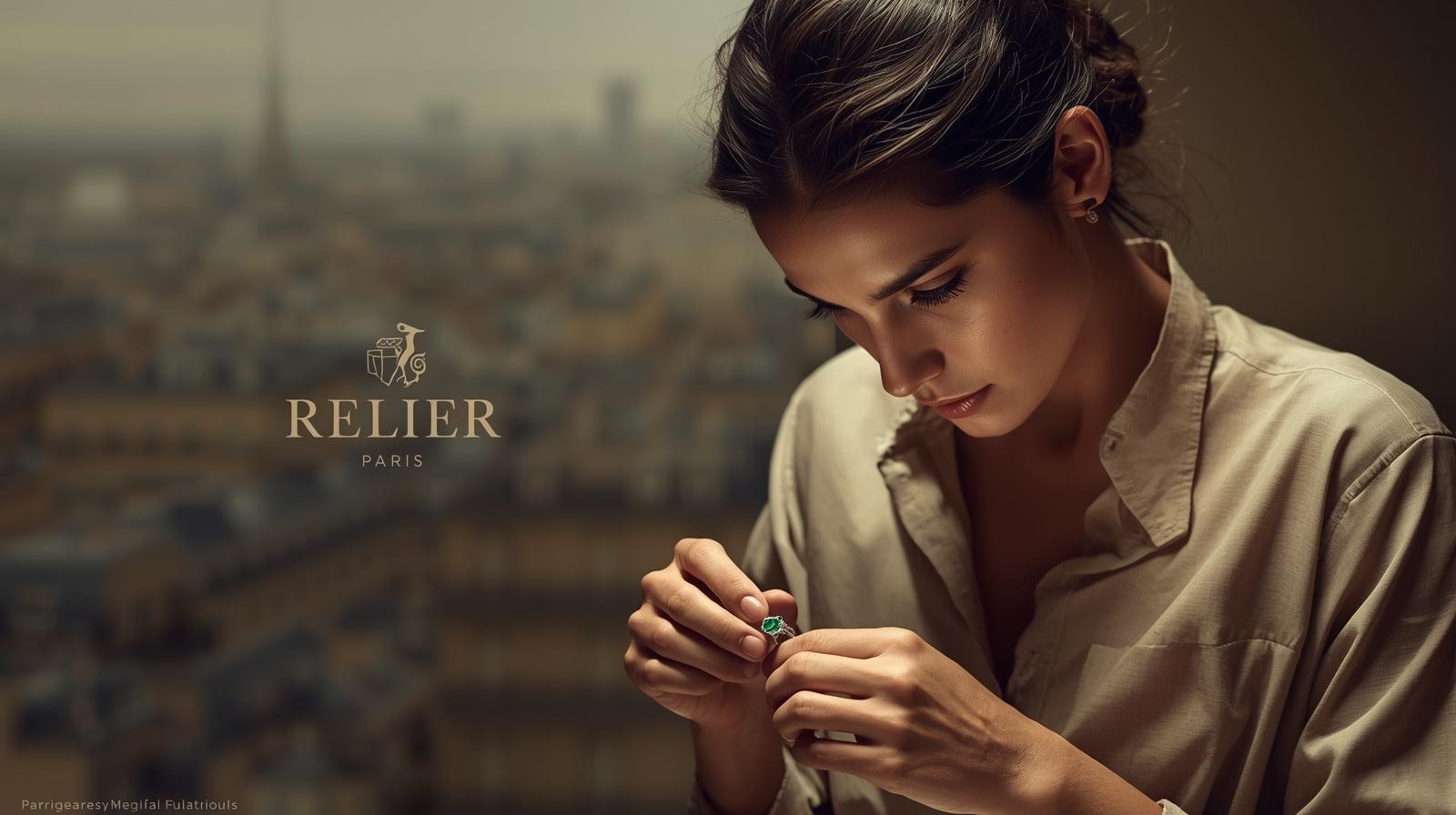
X · The last gesture
Held up to the light, one last time.
Before the jewel leaves the Maison, it is brought to the window. The artisan turns it slowly against the grey light of a Paris afternoon, looking for the only thing that still matters: that the emerald, set, breathes the same way it did when it was first lifted from the mountain. If it does, the piece is signed. If it does not, the work begins again. This is the whole of our savoir-faire.
One stone. Two gestures. A single signature.
From the mountain of Boyacá to a window above the Paris rooftops, the same emerald is held by two different kinds of patience. Relier exists only to keep that thread intact.